


qualifying condition
Who is Eligible for Medicare?
You may become eligible for Medicare when you turn 65 or have a qualifying medical condition. Qualifying for the program is not automatic, unless you are already receiving social security benefits.
When you turn 65, you become eligible for Medicare if you're a:
- U.S. citizen, or
- A permanent resident who has lived in the United States for at least 5 consecutive years before applying for Medicare.
When you are under 65, you become eligible for Medicare if:
- You received Social Security Disability Insurance (SSDI) benefits for at least 24 months
- You have a diagnosis of end-stage renal disease (ESRD)
around your 65th
When Should You Apply for Medicare?
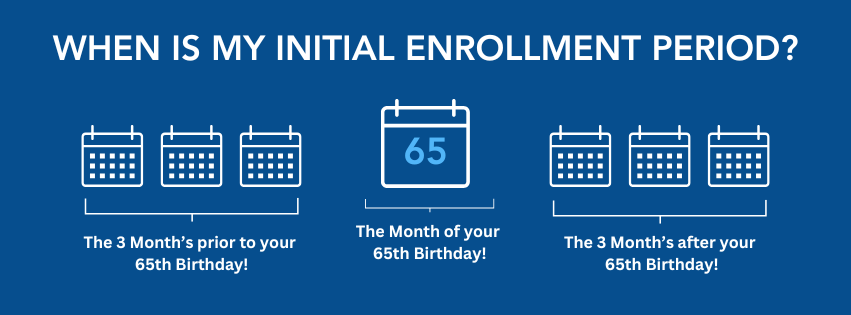
Generally, you can first sign up for Medicare Part A and/or Part B during your Medicare Initial Enrollment Period (IEP). This is a 7-month window that begins three months before your 65th birthday month, includes your birthday month and ends three months after it.
If you're already receiving benefits from Social Security or the Railroad Retirement Board (RRB), you don't need to take any action during your IEP. You'll automatically be enrolled in both Medicare Part A and Part B (Original Medicare), and your coverage will begin the first day of the month you turn 65.
Note: If you have employer group health coverage based on current employment, you may be able to delay enrolling in Part A and/or Part B without paying a lifetime late enrollment penalty later. However, factors such as employer size, coverage type, HSA contributions and work status can affect whether delaying enrollment is appropriate for your situation.
coverage starts next month
What if I Miss My Initial Enrollment Period
If you miss your Medicare Initial Enrollment Period (IEP), you may still enroll during the Medicare General Enrollment Period (GEP), which runs from January 1 through March 31 each year.
The General Enrollment Period applies only to Original Medicare (Part A and Part B). If you want a Medicare Advantage (Part C) plan or Medicare Part D prescription drug coverage, you will need to wait until the Annual Election Period, which takes place in the fall.
Important note
The General Enrollment Period is not a penalty-free alternative to the Initial Enrollment Period. Enrolling during this time may result in late enrollment penalties that stay on your premium for as long as you have Part B. Your coverage begins the first day of the month after you enroll.